
Introduction
From the serene classical concerts to the pulsating beats of Bollywood, one instrument consistently provides the rhythm and soul: the tabla. This pair of hand drums is more than just a percussion instrument; it is the heartbeat of Indian music, embodying centuries of cultural tradition and rhythmic wisdom. If you’ve ever been captivated by its intricate, vibrant sounds, this post is your invitation to explore the fascinating world of the tabla.
What is a Tabla?
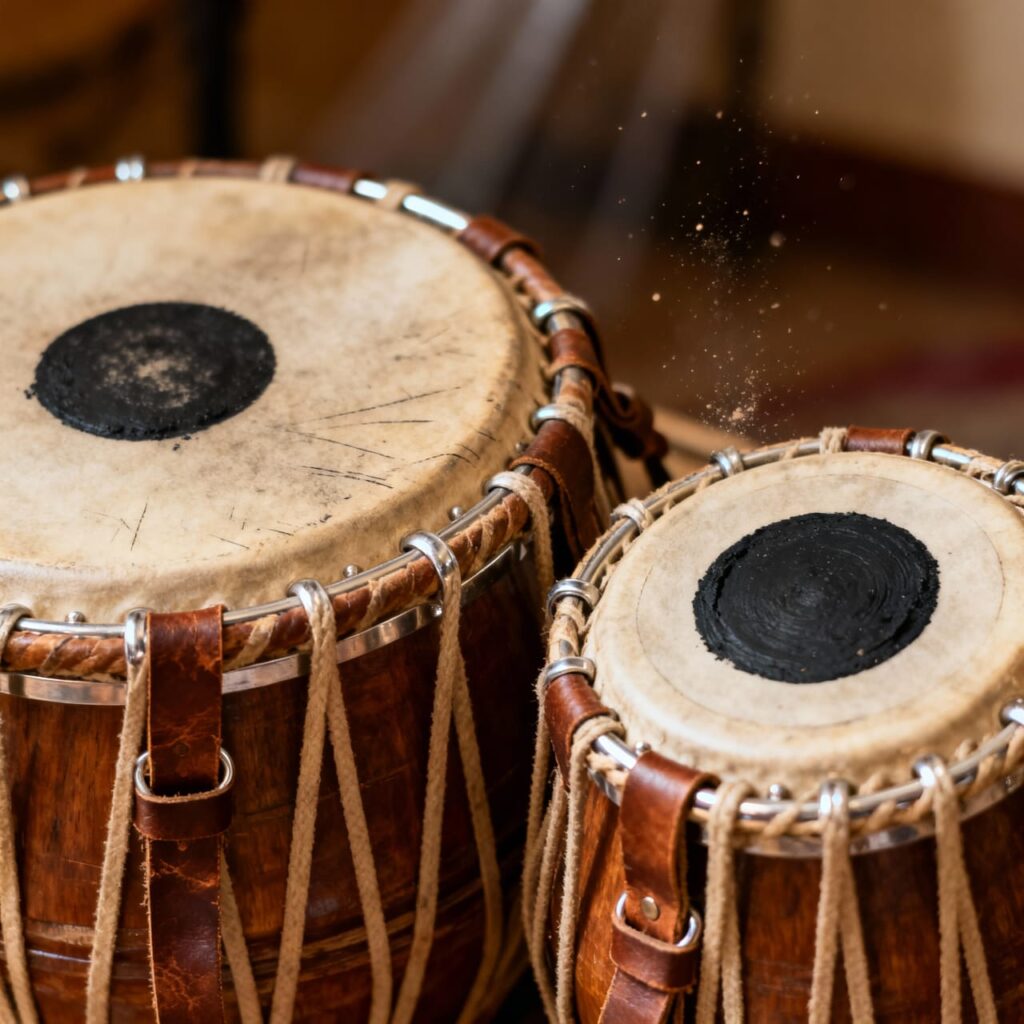
The tabla is a set of two drums, each with a distinct character.
- Dayan (Right Drum): This smaller, higher-pitched drum is typically made of wood, such as sheesham or neem. It is tuned to a specific musical note and produces sharp, melodic sounds.
- Bayan (Left Drum): This larger, kettle-shaped drum is usually made of metal (like copper or brass). It produces the deep, resonant bass tones. The player can modulate its pitch by applying pressure with their palm.
The Language of Rhythm: Bols and Taal
What makes the tabla truly unique is its rhythmic language. Every stroke has a corresponding syllable, or “bol.” By combining these bols, a musician creates complex rhythmic phrases. These phrases are then organized into a rhythmic cycle known as a “taal.” A taal serves as the foundation for the entire musical composition, guiding the melodic improvisations of other musicians.
The Evolution of the Tabla
The exact origin of the tabla is a subject of debate among historians, with theories ranging from evolution out of the ancient pakhawaj drum to a later creation during the Mughal era. Regardless of its precise beginning, the tabla cemented its central role in Hindustani classical music by the 18th century, and its influence has only grown since.

Conclusion: A Timeless Legacy
Today, the tabla’s enchanting rhythms are heard across the globe, in Indian classical music, devotional songs, folk tunes, and modern fusion genres. In our next post, we will meet some of the legendary tabla maestros who have elevated this instrument to global fame.